10) BACK TO THE DRAWING BOARD... KIND OF?
We had a great foundation and knew what we wanted to provide users with, but needed to think of a different way to do this. As a group, we sat down and started to think of ways we could address these issues without sacrificing the novelty of our design.
Our first change was to get rid of the glass. We all loved the glass idea but realised that there were too many constraints to overcome to make this something that we could put in users hand. Not only is the glass screen difficult to see and fragile, the technology does not yet support the AR overlay feature. We decided that between all of these challenges, it might be best to navigate back to a traditional screen, such as an ipad. The traditional screen would allow us to control display settings, is more durable, and is technologically advanced enough to support AR.
The next change we knew we needed to make was the singular screen. We either need to make a larger screen, which users would not be able to easily carry through the garden, or create a split-screen device. Our original inspiration was to create this interface using a Nintendo DS. The DS does support AR overlays however, there were other legal constraints that stopped us from pursuing this route. Instead, we solidified on the Samsung Galaxy Z Fold7.
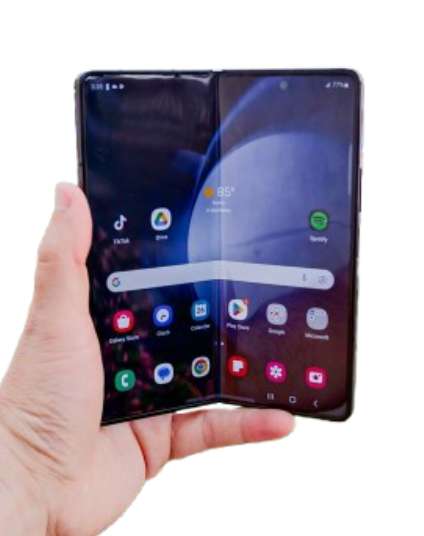
This device would allow us to make a less cluttered interface. The top screen would display a live camera feed captured by the device with added AR overlays. The bottom interface would display guided informational messages told by wormy as well as supplemental visuals. Creating these two screens allowed us to not only keep all of the previous information, but add more storytelling visuals. It helped to create two separate interfaces all within one space. When the device is folded, it will display a map of the garden highlighting different interaction points helping the users to navigate throughout the garden.
This device solved all of our problems while maintaining a novelty to our design. Now we had to re-think the layout of our previous interactions.
Post a comment