2) VISITING MUSEUM + PESTLE ANALYSIS
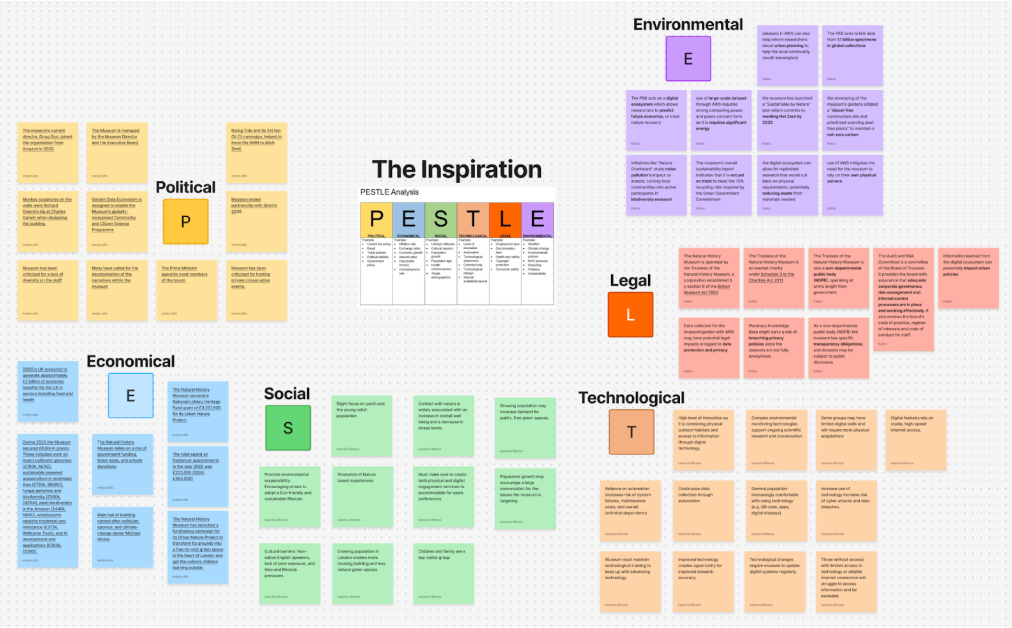
Before this project, I had actually never been to the Natural History Museum. Listening to Ed speak about the data collection in the garden was eye opening; I had no idea how much data was being collected. At the end of the trip to the museum we received the coursework brief. From the brief I create several questions in directly alignment to the brief:
- How do we connect all 3 of the areas (museum, garden, community)?
- How can we encourage people to engage with the information?
- What questions can the sensors in the garden answer?
- How can we use this information for good?
- Is there a specific type of information we should focus on and how might that relate to the community at hand?
- How does all of this information work together?
- What information gaps have already been answered?
- What is the main goal?
- How can we make something physical, something digital in a helpful, fun, and interactive way?
- How can we ensure users will understand how to use this technology specifically for its intended purpose?
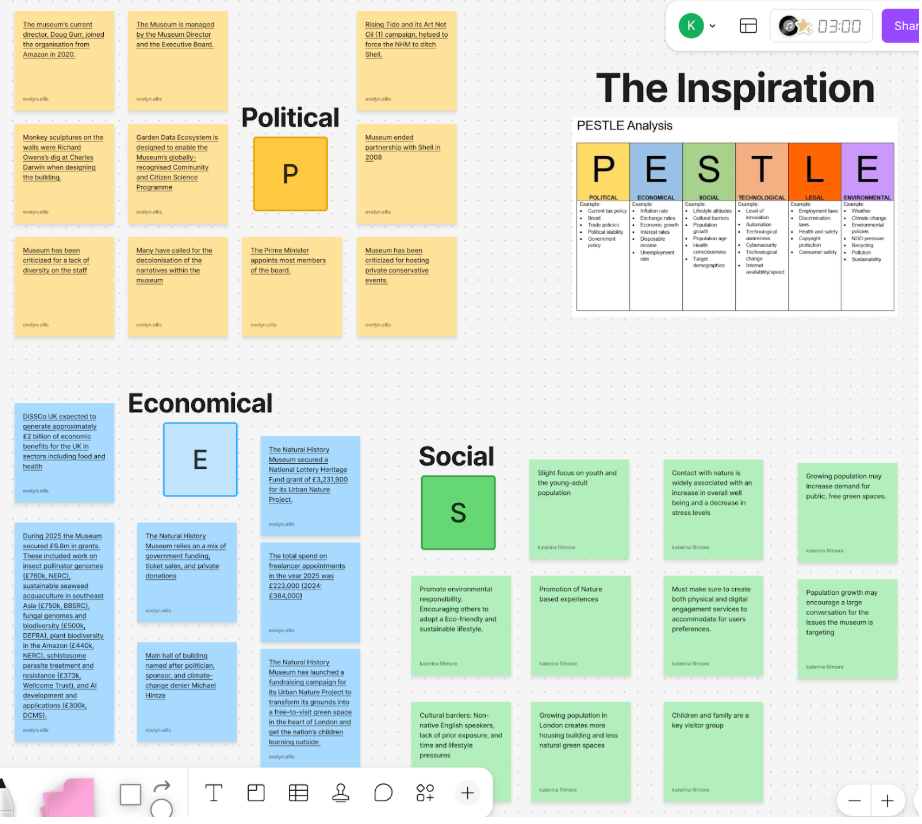
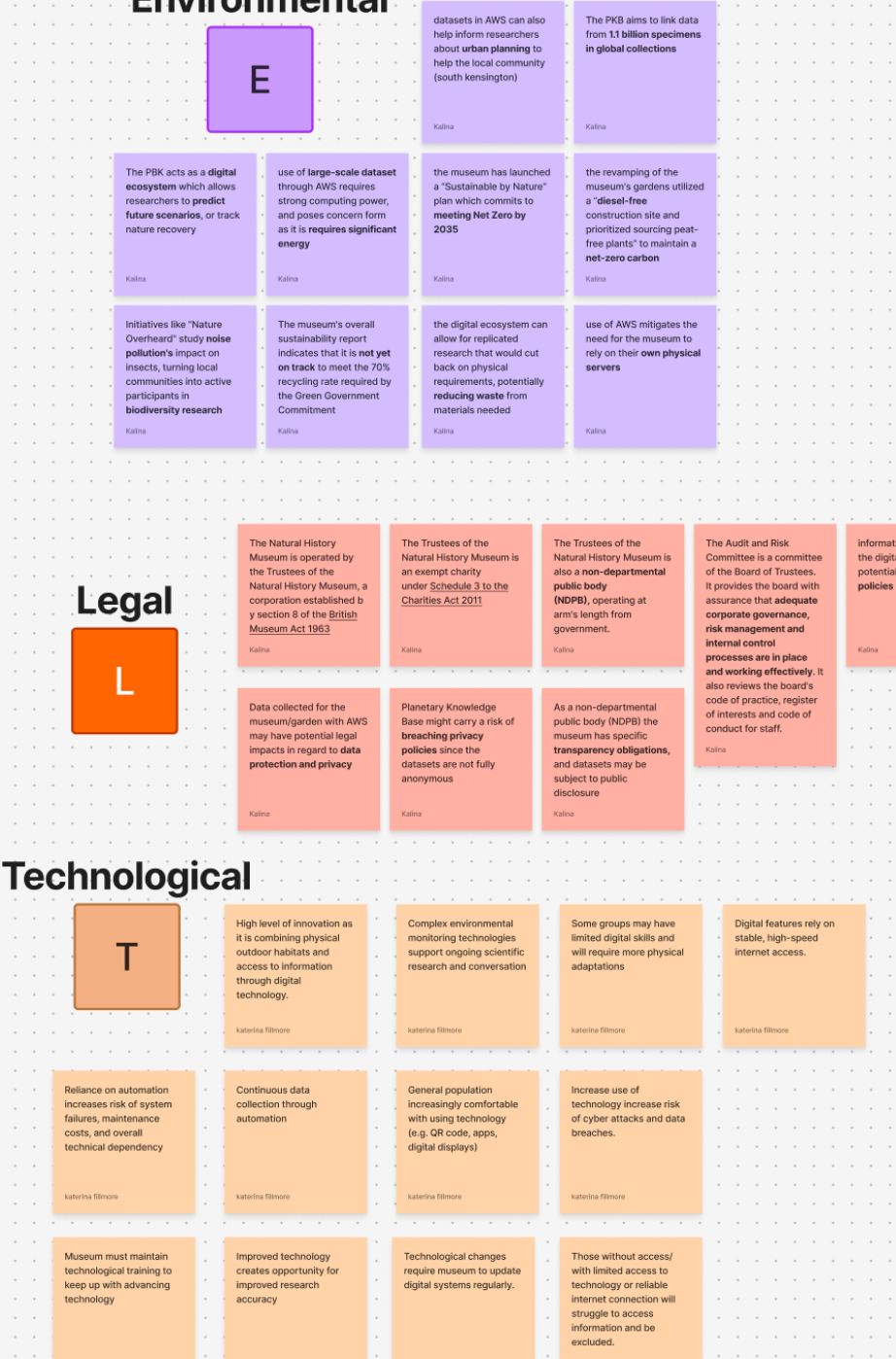
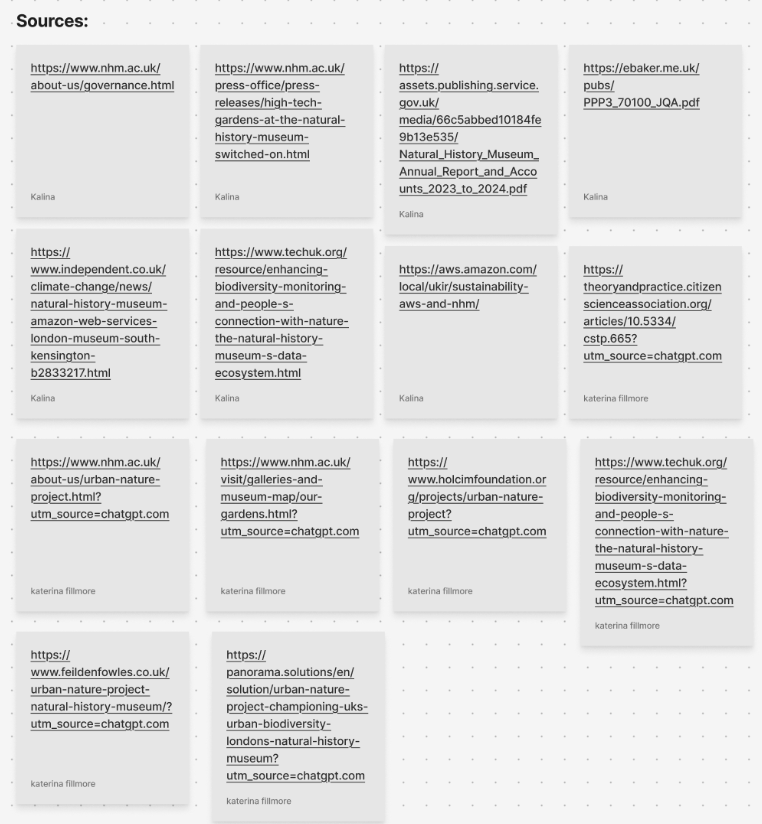
After leaving the museum my group conducted a PESTLE analysis to familiarise ourselves with the Political, Economic, Sociological, Technological, Legal, and Environmental Influence of the Natural History Museum and Gardens (CIPD, 2021). Completing this exercise allowed us to gather further insights about the museum and gardens to understand how the above questions might be answered.
CIPD (2025) PESTLE analysis factsheet. Available at: https://www.cipd.org/uk/knowledge/factsheets/pestle-analysis-factsheet/
Post a comment