9) BODYSTORM
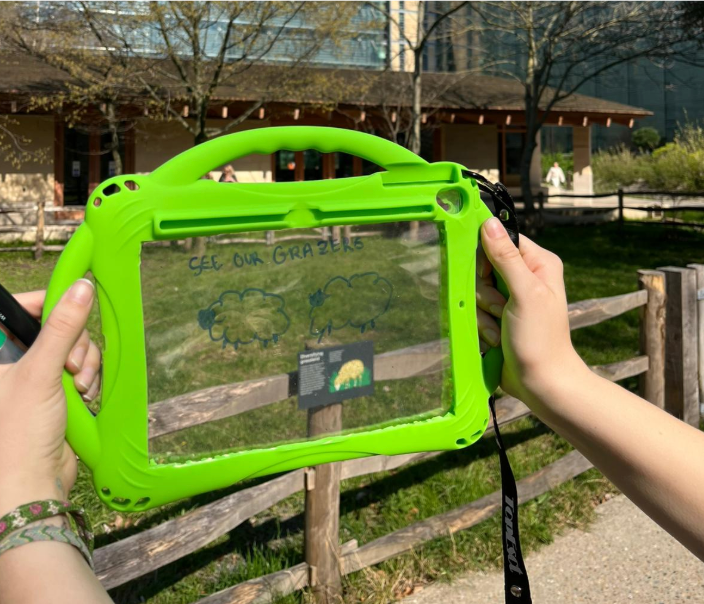
After we had solidified our idea and some of the interactions we might want to display through wireframing, we decided to take our idea to the garden. We created a physical prototype to test in the garden using a rubber ipad case with handles. We cut the middle of the ipad out and replaced it with a sheet of plastic to mimic the glass. We wanted to create something that we could actually test in the gardens to put ourselves in the positions of the visitors.
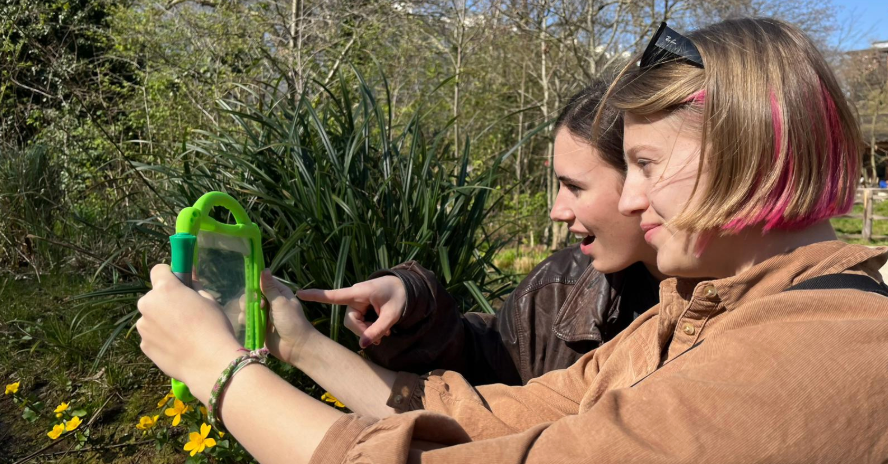
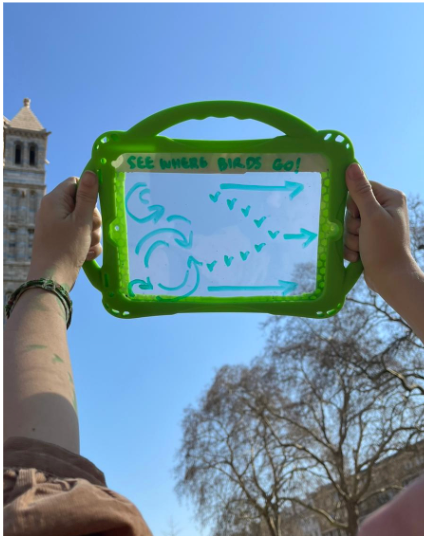
In the gardens, we completed a bodystorming exercise, which allowed us to simulate and role-play what our device would do by physically walking through scenarios (Think Design, n.d.). Once we were in the garden we began to draw out some of the overlays we had previously created through wireframes. This experience provided many positive insights, but it also introduced us to some issues users might experience when using the device.
- The glass interface caused too much glare from the sun. It made it difficult to see the overlays being displayed due to lack of contrast. There was no way to adjust the brightness.
- The glass interface is extremely fragile. It would not be durable long term.
- The screen felt cluttered. We felt like we were trying to fit too much information into one space, but that all of the information we were providing could not be sacrificed.
After this, we knew we had to brainstorm some new ideas to address these issues.
Think Design (no date) Bodystorming. Available at: https://think.design/user-design-research/bodystorming/
Post a comment